Lifting the Verge
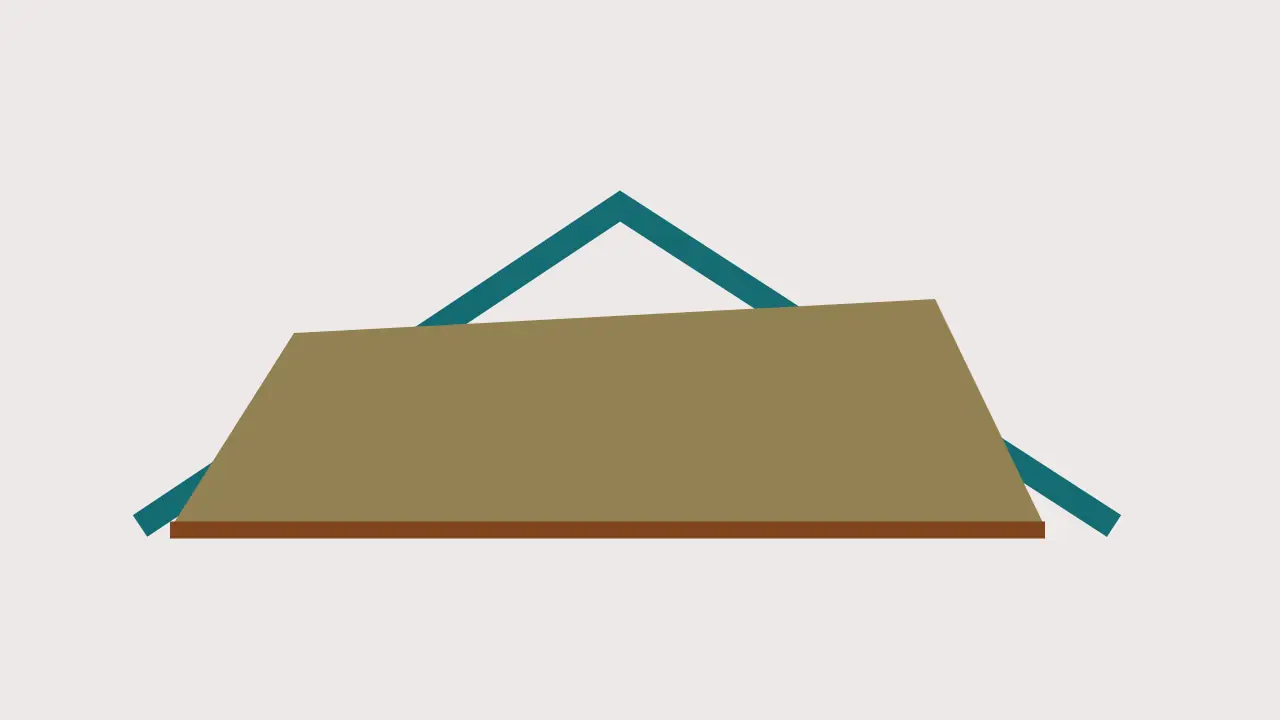
The first model of the verge used a thin strip of leaves against the front of the village. The strip bent freely along its whole length when the traveler pulled it. That exposed much of the second sheet at once, and it made the tab difficult to find after the first look. We moved the bend to one fixed line and made the amount of lift correspond to two things the traveler could see.
Keep the village visible before the pull
From the first street, a row of small openings sits above the foreground. The hedge cuts across the base, where its leaves hide the first turn of a track. We make the near edge a little darker than the paper behind it. This leaves the small tab distinguishable from the broken edges of the leaves. A viewer who is still far away can identify the shape as part of the hedge and then walk closer to see where it attaches.
The important effect of the first lift is a gap in the front layer. It gives the traveler a line into the space behind the house without letting them move across the whole corner immediately. We draw this gap in the first few lifted frames so it appears before the player can walk there. The traveler can stop and decide whether they want to lift the rest of the sheet.
Retain a stable crease at the base
Earlier the shadow crossed the full width of the set from one frame to the next. Without a crease the patch of dark paper looked as though it had moved along the floor. We fixed the bottom edge to one board and changed the distance from the light. A short shadow marks the gap between the raised paper and the base. Its edge travels farther than the attachment point. This gives an illustrator a way to show movement and a player a reason to trust where the tab will be when they lower it.
The tab is shaped to be grasped above the leaves and still leave an intact strip across the front. A cut that reaches too near the crease makes the front panel read as two smaller shapes. A cut that stops too far away makes the available opening look disconnected. Our revised mold for the front has a small rounded end on the tab so it can be identified in the wide image and the close study.
Use the short sequence as a reading test
The featured clip follows the resting hedge, the first gap and the final lifted position. It uses the same illustration and changes its raised portion across the sequence. The test is to see whether the viewer can point at the cut edge before looking at the descriptor. A caption explains where the traveler gains a view and where the completed opening gives them room to make a step.
The camera stays level while the movement happens. On the finished village page we also let the traveler look at the result from near the first bend. The house wall remains in the background, and a bit of the front door can still be remembered from the approach. We keep the intermediate pose available while the player learns which corner will become clear.
Find the inner reference after the lift
Village Behind the Verge puts the opening beside the door where the traveler begins. A Window on the Back follows the second reading after the player has reached the lane. We will review the two views by lowering the hedge again before returning to the bend. If the traveler can still recognise the opening and the house, the front sheet has offered a route without consuming the references needed to use it again.