Triangular Bearing
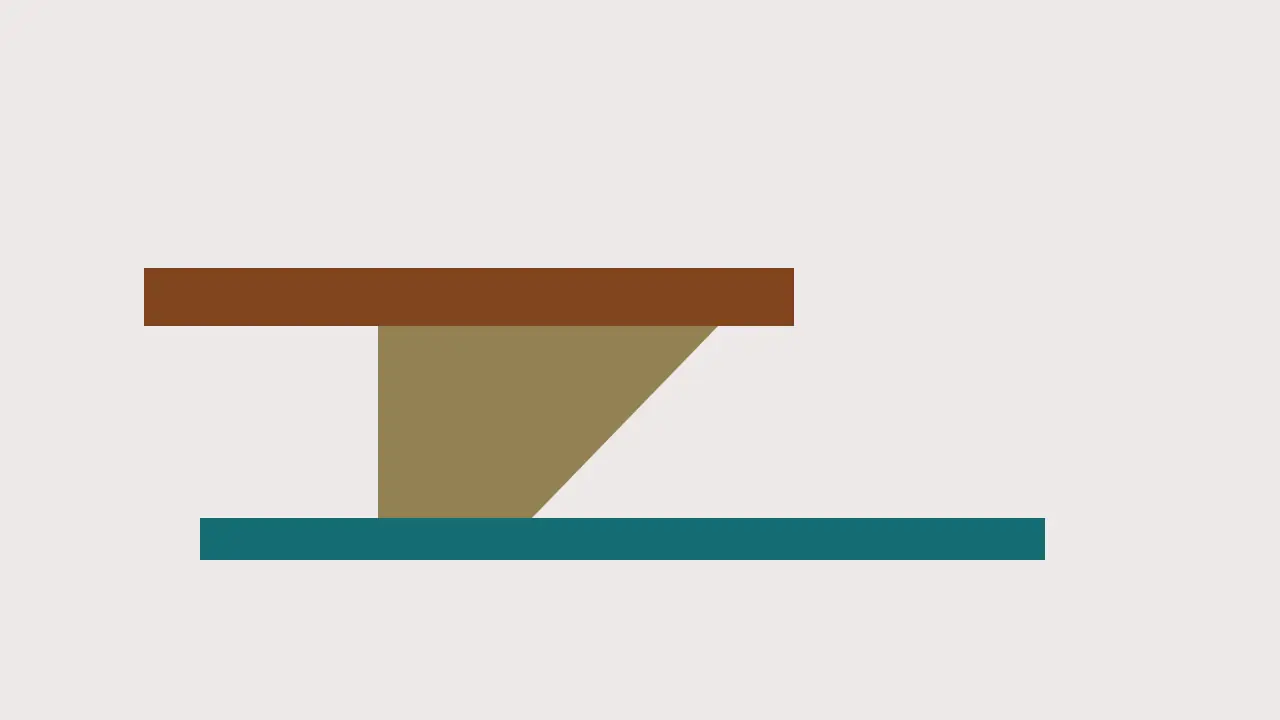
In the bridge model the foreground sheet originally extended straight across the river. A small fold could rise underneath it, but the traveler could walk on the same surface regardless of where the fold sat. We made the first span shorter and gave it a triangular bearing. The change turns a decorative bit of cardstock into a clear part of the route.
Draw a region that can support the first foot
The near span ends a little above the center support. The triangle rests between the surface a foot can use and a quieter strip against the river. When the bridge is in its normal state, the contact under the span has a short straight edge. From the side of the book the traveler can see that edge before crossing. From above, the same line can be checked by looking where the first shadow ends.
On the earlier model the support and bridge were made with the same dark material. They became one thick edge in the first view. We switched the support to a lighter shade and placed its crease beyond the darkest part of the span. The material remains similar enough to look assembled. A visible corner distinguishes the folded part from the main sheet while the traveler approaches the stream.
Use the triangle while the other sheet turns
The bridge has a second span behind the first one. It can rise on another hinge and reveal its reverse face. The first span should remain usable while the rear portion is up, at least as far as the center support. We adjusted the overlap so the corner of the rear sheet lifts out of the approach. Now the traveler can reach a stable center position and inspect how the remaining gap has changed.
If the near span is raised as well, the footpath is interrupted. A reader may still see the whole front surface from a different point. What has changed is the place where a foot can rest, and the model uses the visible contact edge to make that clear. We can lower the first span while leaving the other at an interesting angle so the earlier decision remains available.
Keep the fold stable after the turn
One early mechanism let the triangle flatten after the traveler reached the center. We wanted this action to feel like movement in a layered book, but the contact disappeared and confused the route. The current structure holds the fold in its stable position until a player chooses to move the connected span. When it lifts we keep the crease visible. It shows which part will come back down onto the support.
The illustrated note follows the fold under light from two directions. A high light makes it clear how far the end of the span reaches. A lower light shows the creased portion when the other sheet lifts. They are different views of the same fold. The more accessible viewing position remains available on the route even if the first camera has moved to the end of the raised paper.
Read from a useful place on the crossing
The Folded Footbridge lets a traveler walk onto the short first span to see what the rear sheet reveals. The reverse tale note explains why the hidden mark must be readable from somewhere the player can stand. Our next review will check if they can name the contact beneath the span, lift the back without losing their current position and then lower the paper to finish the crossing. Those actions leave the fold with a clear role even after the mark on the reverse has been found.